



Pereira Coutinho, Maria João. “Goa, Lisbon, and Rome: A ‘Triangle’ of Business and Culture.” In “Circa Missiones: Jesuit Understandings of Mission through the Centuries (Proceedings of the Symposium held at Lisbon, Portugal, June 12–14, 2023),” ed. Alessandro Corsi, Claudio Ferlan, and Francisco Malta Romeiras, special issue, International Symposia on Jesuit Studies 3, no. 1 (2026): 1–15. https://doi.org/10.51238/ISJS.2023.12.
 Open Access
Full Article
Metadata
Cite
Full Article
Introduction
The history of the Society of Jesus is not a sum of disjointed missions but instead resulted from concerted action between various assistancies and, subsequently, between multiple provinces.[1] Knowledge of this modus operandi, which comes from cross-referencing information scattered in the correspondence between Jesuits stationed in the major European centers, such as Rome and Lisbon, and in the major centers of the overseas provinces, such as Goa in the case of the Portuguese assistancy, proves the existence of a dialogue, as well as a joint mission, often supported by the exchange of goods.[2]
It was only possible to missionize through fundraising, administering assets, attracting financial backers, and access to an immense network of contacts. For the Jesuits operating between Lisbon and Rome, artworks were a vehicle for attracting external funding for the missions and captivating the central powers in Europe and elsewhere in the world. If the specificity of objects produced in the various European nations was used to the advantage of the missionaries in Asia, when one artwork was particularly successful, everyone benefited from that success. Proof of this relationship was the advantage the Germans and Italians enjoyed in China with the goods produced by the Portuguese Gabriel de Magalhães (1610–77) and Tomás Pereira (1645–1708).[3] The Portuguese also benefited from the works of the Italian Giuseppe Castiglione (1688– 1766).[4] Correspondence from the Portuguese mission shows particular concern over the possible loss or death of Castiglione, emphasizing the need to be prepared for such a situation. The missionaries suggested that inquiries be made in Portugal to identify other brothers with similar artistic abilities who could potentially replace him, highlighting how vital artistic talent was to the mission’s success and influence.
One issue that seems to be less clear is the networks developed in the missions to fulfil the multiple orders for Asian works that began to grow exponentially in Europe in the ecclesiastical and political spheres. However, it is apparent from the documents that this work of creating links on the ground was carried out with the cooperation of local merchants. But what do we know about these merchants? Although he operated under the Spanish assistancy, the Portuguese procurator Francisco Bello (or Francisco Velho [1605–?]) stands out as an example of someone who maintained a strong network of local contacts. This network greatly facilitated the acquisition of local products, which were not only used to secure favors and prestige in Europe but also to establish relationships with local agents. These connections, in turn, supported and enhanced the effectiveness of the missionaries’ work in the field.[5] The manuscripts researched on Francisco de Cordes (1689–1768), who was a procurator in Japan and later procurator-general of that province, have also borne fruit in the sense that this Jesuit knew the merchants of Guangzhou well.[6][7]But what is known about the procurators of India? In the regimento for the procurator of India in Portugal of 1587, it is explained that the position had three objectives: to engage in business to finance the mission of India, to locate people with specific skills to go to that province, and to ensure the delivery of correspondence and other goods from Rome and Europe to that geographical area.[8] The “Index of the Orders of the Fathers General for the Province of Goa” of 1655 states that procurators should not engage in business without being able to negotiate. The same document also states that the procurators of the colleges had to take care of temporal affairs and that their accounts would be subject to inspection.[9] The Goa procurators had to sell what came from Macau and had been ordered from the procurators of that port. As seen below, this point also led to improper cargo sales going to Lisbon and Rome.
By analyzing the correspondence of three virtually unknown Jesuits, António Ferreira (1700–61), Marcelo Leitão (1679–1755), and António Cabral (1693–1758), procurator of China in Goa, procurator-general of China in Lisbon, and procurator of the Portuguese assistancy in Rome, respectively, we can better understand the competences and mission of each of these types of procurators. That procurators were initially elected in the provincial congregations, with the task of going to Rome to deal with the affairs of their respective province, does not seem to have invalidated the emergence of the procurator-general of the missions, who, like the Roman procurator-general, circulated little and operated from a single location.[10] The expansion of the Society of Jesus to the West Indies and the East seems to have prompted the need to configure these two functions, as specific local situations required distinct policies.
In the provincial congregation of 1556, the Jesuit Manuel Godinho (1519–69) was elected procurator of the Portuguese province and the Indies, and in 1558 it was the turn of Jorge Serrão (c.1528–90)[11] to act as procurator of India and Brazil.[12] Father Francisco Henriques—who joined the Society of Jesus in 1545 and died in 1590—also held the position of procurator-general of India and Brazil,[13] and Father Jerónimo Cardoso (1548–1605) was, at the same time, not only procurator-general of India and Brazil but also procurator-general of the province of Portugal.[14] These geographical designations show that from a very early stage there was an attempt to distinguish these Jesuits from elected representatives, who represented a single space.[15]
The degree of autonomy achieved by Alessandro Vallareggio (or Valla-Reggio [1529– 80]) after 1573, when he was appointed procurator of the West Indies by Superior General Everard Mercurian (1514–80, in office 1573–80), confirms, on the other hand, that at some point this position had already left the orbit of the provincial congregation, with these appointments being made by the general.[16] It also attests to the greater specificity of the post, resulting from the separation of the West Indies from the East Indies, which was to become even more specific when procurators general were established for each of the provinces and vice-provinces.
The Procurators Marcelo Leitão, António Cabral, and António Ferreira
Born on June 6, 1679 in Alcoutim, Marcelo Leitão joined the Society of Jesus in Évora on September 2, 1696. He professed in 1714,[17] and in 1729 he was appointed procurator-general of Japan in Lisbon.[18] In 1741, he also took on the role of procurator-general of China and procurator-general of India.[19] During his time as procurator-general of the China mission, he carried out mediating roles with the Holy See as well as in China, accompanying the missions of Portuguese ambassadors Manuel Pereira de Sampaio (1692–1750)[20] and Francisco Pacheco de Sampaio (c.1711–67). Around 1751, he was preparing Father José Rosado (1714–97) to succeed him as procurator.[21] In 1752, he obtained confirmation of the royal exemption from taxes on the sale of goods, which promoted the circulation of products between the various Jesuit houses in Europe, the Americas, the Atlantic Islands, and Asia. Leitão died on November 1, 1755 at the Santo Antão-o-Novo college in Lisbon after falling seriously ill the previous year.[22]
Cabral, who was born in Lisbon on January 10, 1693, was the son of António Cabral da Cunha, a knight of the Order of Christ and nobleman of the Royal House, and D. Bárbara Maria de Matos, according to bibliographer Diogo Barbosa Machado.[23] The records in the triennial catalogs confirm that he joined the Society of Jesus on December 31, 1709 at the novitiate in Lisbon.[24] Between 1709 and 1726, he attended the Colleges of Angra do Heroísmo (1717), Santarém (1720), and Santo Antão-o-Novo in Lisbon (1726).[25] It is unclear exactly when he went to Rome; however, it is known that he left Portugal in order to work as an assistant to the superior general.[26] During his stay in Rome, he took on the role of procurator and “business agent.” He was mainly involved in the beatification process of Inácio de Azevedo and the Forty Martyrs of Brazil. As part of this process, he published the relation of this martyrdom in 1743 in Rome and the following year in Madrid.[27] Giovanni Bernardino Capriata reports that he died of poisoning on February 8, 1758 following the murder of his assistant.[28] The same author also mentions that Father Cabral had been called to Lisbon before that date and insinuates that his presence had been requested by a fraudulent administration.[29] However, the fact that this statement appears in a work considered anti-Jesuit propaganda leaves doubts about its veracity.[30]
Since there were two Portuguese Jesuits by the name of António Ferreira active during the first half of the eighteenth century, it is essential to identify the one who was procurator in Goa.[31] Joseph Dehergne suspected they were two homonyms. One was born in Lisbon in 1673 and the other in Porto in 1700.[32] The first joined the Society of Jesus on January 15, 1689 and was in Goa by 1699.[33] From 1700 until 1717, he was in Portugal, at the Colleges of Évora, Coimbra, and Braga, and in 1722 he is mentioned in a Goa catalog as belonging to the vice-province of China.[34] In 1706, there is a record of the name António Ferreira, from Lisbon, in the catalogs of the Chinese vice- province, although the note states that he was born in 1671.[35] In 1730, the same Jesuit from Lisbon was once again in that city, but he does not appear in the catalogs from that time on.[36]
The other António Ferreira joined the Society of Jesus around 1717 and spent a large part of his religious career in Goa; from 1724 until 1756, he is mentioned in various triennial catalogs of that province.[37] In 1724, he was appointed procurator of the vice-province of China in Goa.[38] In 1734, he made his final vows and assumed various positions in the residences of Goa: superior and rector of the college and the house of probation.[39] In 1735, he continued to act as procurator of China in Goa.[40] It is from that time that the correspondence that has come down to the present day stems. It is still unknown when he returned to Portugal, but some authors suggest that he died in Azeitão prison on June 24, 1761.[41]
Performance and Dynamics
Having briefly discussed the careers of these procurators, it is important to analyze three points that shed light on their actions and interactions. The first concerns their work on the causes of beatification and canonization, the second concerns their financial activities, and the third concerns cultural and artistic dynamics. As will be seen, these three topics are linked.
The causes of beatifications and canonizations were one of the main issues on the agenda of the procuratorates and of the procurator of the Portuguese assistancy in Rome. Although there may have been differing perspectives within the order, these were overshadowed by greater causes, such as the sanctity of its members. The canonization of the Jesuit saints was a success both internally and externally because, diplomatically, it united Rome with Spain and Portugal. The pressure exerted by the Jesuits to establish Portuguese colleges cannot be dissociated from the royal influence that was being felt, based on the long-standing connection between the Portuguese royal house and the Society of Jesus, but above all on the desire of King Pedro II (1648–1706, r.1683–1706) to restore Portugal’s diplomatic relations with the Holy See.
Reopening the process of beatification of Inácio de Azevedo and the Forty Martyrs of Brazil[42] and promoting the cause of the beatification of the missionary João de Brito highlighted the importance of the Portuguese assistancy in the field of missionization, but it also emphasized the importance of the Portuguese crown, which was one of the main driving forces behind this Jesuit cause. That Inácio de Azevedo’s family had been significant in the Portuguese public administration may also have played a part in getting this cause off the ground. His brother Jerónimo de Azevedo was viceroy of India, and João and Manuel de Azevedo were governor of Mozambique and captain of Chaul, respectively.[43] As for Brito, his father had also been governor of Rio de Janeiro, and the Jesuit, between trips to India, was chosen by Pedro II as tutor to the infant João (1689–1750).[44] Although the king’s wish was not fulfilled, as the superior general again sent Brito to India, this Jesuit also continued to have the support of the crown.
At the same time, the monarchs became involved in the process of public recognition of the Jesuit saints, taking on a particular commitment in the case of Father João de Brito by commissioning a reliquary chest between 1694 and 1698, which is now kept in the Museum of São Roque in Lisbon (see fig. 1).[45] This casket, built in Augsburg, was meant to hold the cleaver with which Brito was beheaded. However, for unclear reasons, the cleaver was instead kept in the College of Santo Antão-o-Novo until the Jesuits were expelled from Portugal, and the casket never left São Roque, as evidenced by the inventory made of that space after 1759 and the fact that it is kept there today.[46]
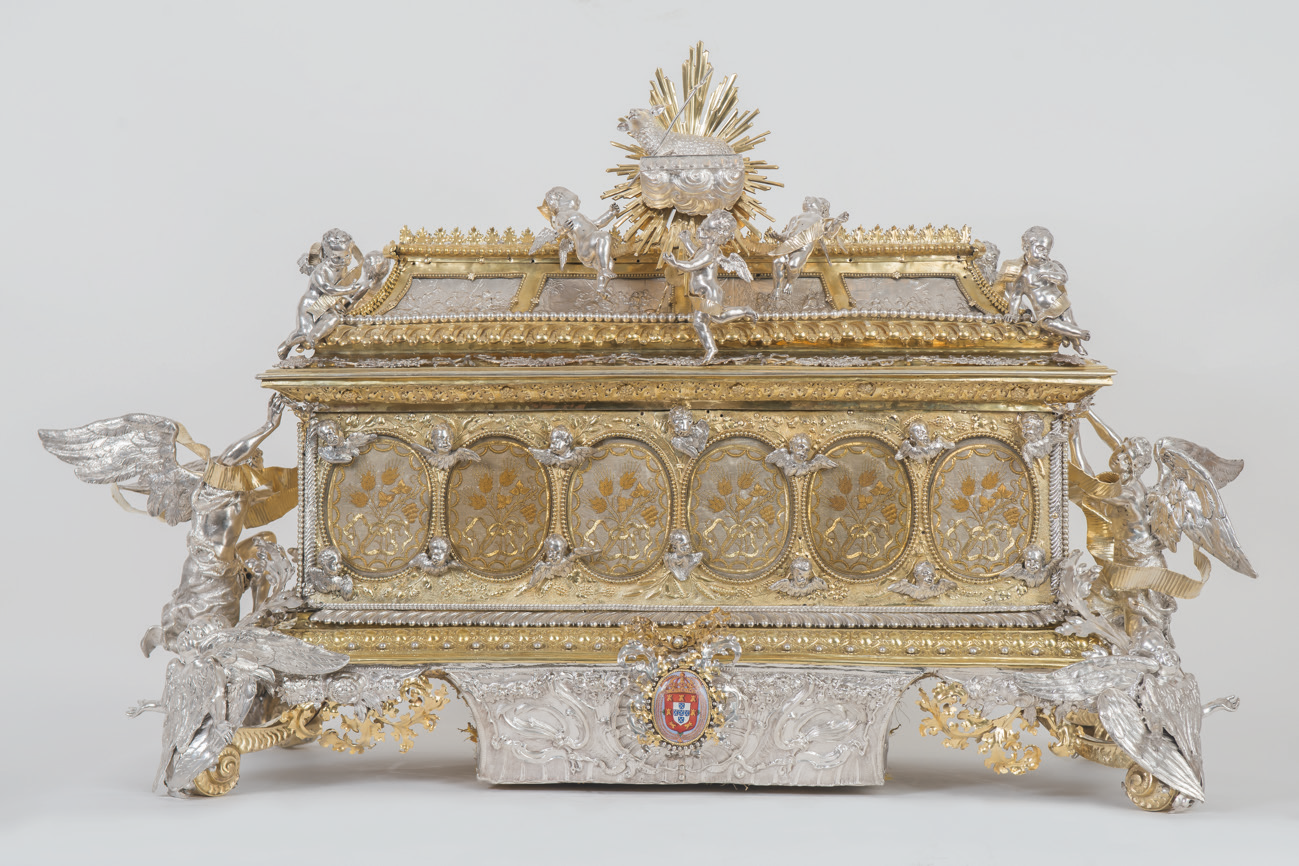
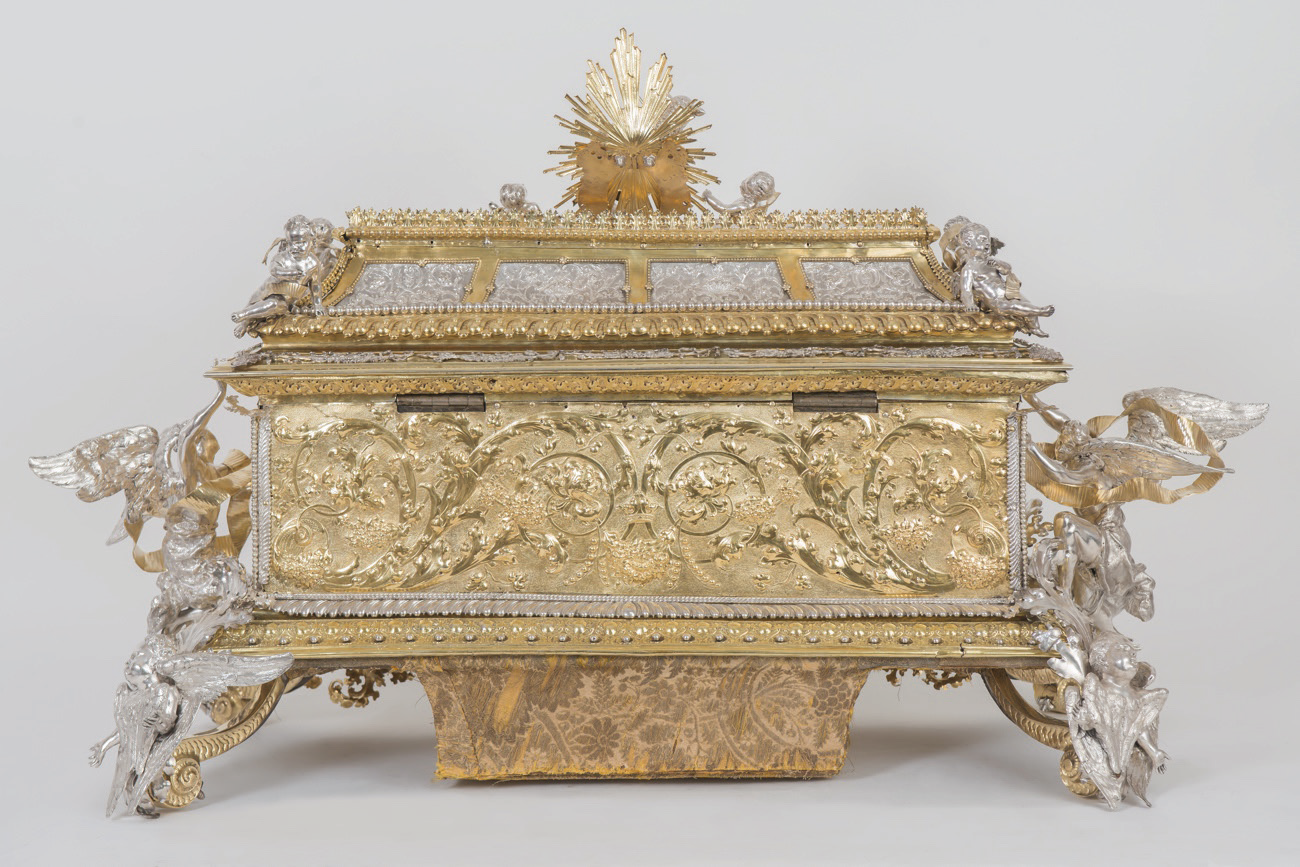
Figure 1. Casket for the relic of St. João de Brito.
Museum of São Roque, Lisbon, 1694–98. MSR / Or 0625.
In addition to the Portuguese king’s commitment to honoring the memory of this Jesuit, it should be remembered that other procurators had already been involved in the processes of beatifications and canonizations, as well as the exaltation of martyrs. One of the examples that should be highlighted is that of Father Sebastião Gonçalves,[47] who took Francis Xavier’s arm with him when traveling to Rome as a procurator in 1615, reinforcing the need to beatify him, which happened three years later.[48] Another example is António Francisco Cardim (1596–1659), who also traveled to Europe as a procurator, reporting to the curia with a view to the canonization of his brother João Cardim (1585–1615). When António Francisco Cardim went to Rome to promote João Cardim’s cause and Vincenzo Carafa’s (1585–1649) election as superior general (in office 1646–49), he also committed himself to the cause of beatification of the Jesuits killed in Japan. This is yet another example of a procurator committed to the task of promoting holiness.[49]
As for the information on the letters that Cabral sent from Rome to Leitão, it is understandable that at this stage, the whole process of beatification of Brito was being delayed by disagreements between Father Alexandre Duarte and the pope. It was only when this Jesuit died in 1745[50] that the process was considered again,[51] and the same seems to have happened with the cause for the beatification of Azevedo and the Forty Martyrs of Brazil.[52]
According to the documentation, Cabral, together with the diplomat Manuel Pereira de Sampaio, minister and plenipotentiary of King João V to the Holy See, endeavored to resolve the disagreement between Duarte and the pope regarding the urgency of beatifying Inácio de Azevedo and the Martyrs of Brazil. Cabral repeatedly requested goods from Goa and China from Leitão to offer to the Cardinal Ponente of the cause of Father Brito.[53] He also requested wine from the estate that the procuratorate had in Carcavelos for the festivities they were going to hold in Rome on the day of St. Francis Xavier and for those they were already planning to hold following Brito’s beatification.[54] This topic will be returned to later regarding the circulation of material culture.
Although Manuel Pereira de Sampaio appears in this diplomatic role in the letters analyzed, he was also in Rome, interceding to establish new bishoprics in China, Tonkin, and Cochinchina.[55]
Regarding finances, a considerable amount of the Chinese mission’s money was managed from Rome by the procurator of the assistancy but always with the consent of the Chinese procurator-general, who was resident in Lisbon. Although there are few references to the will that this procuratorate inherited in 1705 from Juan Thomas Henriquez de Cabrera, admiral of Castile (1646–1705), it is understood that a large part of the money of this procuratorate came from this legacy and was managed from Rome.[56] The inherited money was dispersed among the banks of Vienna, Genoa, Milan, and Naples, and the interest was the procuratorate’s primary source of income.[57]
A letter Cabral sent from Rome on July 6, 1742 states that, as the ship from India was arriving, it was good that cordial stones came with it,[58] as these could be used for medical treatments in Münster and Vienna.[59] Unfortunately, it is not clear whether these gifts were to honor other Jesuits who were in these cities or to give to agents linked to the financial investments made in these places.
In another letter sent from Rome on June 10, 1744, after Prussia entered the Second Silesian War (1744–45) by invading Bohemia, leading to severe financial instability, Cabral told the procurator-general of the vice-province of China that the banks in Vienna had stopped operating. The Jesuit also reported that, fortunately, he had withdrawn eight thousand florins from the bank the previous month and that they had paid him 480 florins in interest.[60] In 1745, the same procurator stated that he was taking money out of Vienna when the time seemed favorable, considering that the exchange rate was sometimes high and sometimes very low given the political instability.[61]
In addition to this form of investment, the procurator of the Portuguese assistancy in Rome was also responsible for organizing bulls, Masses, and dowries. These operations, which he reported to the procurator-general of the mission in China, resulted in payments for the endeavors and debts of gratitude on the part of those who asked and the expansion or consolidation of social networks.
The letters analyzed reveal the identities of some of the people involved. The earl of Unhão, the marquis of Gouveia, D. Lourenço de Almada, the ninth lord of Pombalinho, and the bishops of Lamego and Elvas are some of the members of the Portuguese nobility and high ecclesiastical spheres mentioned.[62] The earl of Unhão had close ties with the procurator-general of China, as the latter had been his family’s confessor. The marquis of Gouveia was also close to the Society of Jesus since Inácio de Mascarenhas, a Jesuit who had performed an essential service in Rome as an envoy for the king of Portugal, was the brother of the third earl of Santa Cruz and the great-uncle of the fourth marquis of Gouveia.[63]
The exchange of letters between Rome and Lisbon also mentions favors given to the guarda-mor of the Casa da Índia (chief keeper of the India House), to his son Cristóvão de Sousa, and the monteiro-mor (great hunter of the kingdom).[64] The kingdom’s monteiro-mor had strong links with Fernão Teles da Silva, second marquis of Alegrete and third earl of Vilar Maior, who went with the Jesuit procurator Francisco da Fonseca on an embassy to Vienna to accompany Queen Mariana of Austria on her journey to Portugal. He was also a descendant of João Gomes da Silva, earl of Tarouca, who had sold his property at the Bairro Alto so that a new college could be built there to train missionaries. All these relationships seem to indicate the existence of social networks that were fundamental to consolidating the position of the Society of Jesus in Portugal.
The Jesuits’ mediation went beyond intervention in favor of the Portuguese aristocracy and even went as far as to hasten requests related to government demands. This is confirmed by referencing the “union of the two Lisbons,” and the passage, on December 13, 1740, of the Bull Salvatoris nostri mater, in which Pope Benedict XIV (1675–1758, r.1740–58) promulgated this royal wish.[65] The city of Lisbon and the diocese territory had been divided into two parts: Western Lisbon, assigned to the patriarchate, and Eastern Lisbon, assigned to the archbishopric. With the suppression of the archbishopric and its integration into the patriarchate, the division was abolished, and according to the letters exchanged, this measure resulted from the intervention of the Portuguese Jesuits.
In addition to this dynamic between Lisbon and Rome and Rome and Lisbon, business also involved Goa. The money from Rome passed through Lisbon and was managed locally by the Chinese procurator in Goa. To this end, he took out local loans, which did not always work out, and made payments for the many goods requisitioned by agents in Lisbon and Rome. The procurator also bought products to run the houses in the latter geographical area. In addition to paying for these products, which ranged from luxury goods to medicinal products, the Chinese procurator in Goa paid for cargo, customs duties, and other taxes. All these expenses were recorded in the procuratorate’s books and in the many reports periodically sent to Lisbon for the Chinese procurator-general.
Some Jesuits were also tempted to associate themselves with business outside of the Society of Jesus. The chronicler António Franco (1662–1732) mentions the case of several procurators from the provinces of Portugal, Brazil, and India whom Father Diogo Monteiro (1562–1634), as provincial of the Portuguese assistancy, severely punished for becoming entangled in secular businesses.[66]
In the cases analyzed, it needs to be clarified whether these procurators were only involved in commissions for Jesuits, or whether they also profited from business with seculars and religious of other orders. However, the various allusions, for example to a loan of 3,500 xerafins that the Dominican friar António do Pilar made to João de Saldanha da Gama (1672–1752), viceroy of India, raises the question of why this reference was made in the accounts that the Chinese procurator in Goa sent to the procurator-general of the vice-province of China.[67]
The work of the procurators in the cultural and artistic fields cannot be dissociated from financial management, nor the defense of beatification and canonization causes. Financing was needed to purchase products. Artistic and medicinal goods, due to their rarity, were necessary to smooth relations and captivate those responsible for the causes.
A list of orders that António Ferreira sent from Goa to Lisbon in 1735, addressed to the general of the vice-province of China, demonstrates the extent to which the circulation of artistic goods made it possible to make new contacts within the Society of Jesus and beyond.[68] This document also shows how expensive the transaction was. The cargo, which consisted of eight trunks, contained porcelain, terracotta, calaim (a type of pewter), lacquer objects, silk, damask accessories, ambalacata artefacts,[69] and much-needed medicinal products (cordial stones, amber, St. Ignatius beans, and rhubarb). The pieces were intended for Jesuit brothers and priests as well as other actors.
The sending procurator and the receiving procurator in Lisbon acted as intermediaries in these exchanges. Interestingly, although these agents belonged to the Portuguese assistancy, they were also responsible for the circulation of Jesuit goods from other assistancies. This is demonstrated by the presence on this list of objects dispatched by Giuseppe Castiglione, Xavier Ehrenbert Fridelli (1673–1743), and Ferdinando Moggi (1684–1761). That the same cargo carried items that were to be sent to Genoa, Rome, and Naples, as was the case with those destined for the brothers Pier Francesco Tambini, Pedro Maria Giachino, Vicencio Dandim, and Nicolau Rossi, once again confirms the importance of the Portuguese procurators in this product distribution network. In the specific case of Giuseppe Castiglione, the connection he had with Portugal should not be ignored. In 1711, he was registered as a resident at the house of probation of Lisbon.[70] The following year, according to the Jesuit chronicler António Franco, he painted works for the College of Coimbra.[71]
It was also inevitable that there would be goods that went on to obtain favors from the high clergy and the court, as happened in the same cargo with those destined for Cardinal Cunha and the infant D. José.[72] This topic provides a lens through which to examine, in the context of the correspondence between António Cabral and Marcelo Leitão, the careful efforts made to procure gifts aimed at securing the favor of the cardinal responsible for overseeing the beatification of Father João de Brito.
On February 18, 1741, a request was made for violet wood from Brazil for tables and picture frames.[73] On July 6, 1742, the ecclesiastic also asked to receive some marquetry in mother-of-pearl or boxes for communion wafers.[74] On September 7, 1742, the requests for pieces for Father Brito’s cause included lacquerwork objects, especially with enamels and mother-of-pearl.[75] As the cause seemed to be making no progress, in 1743 the cardinal continued hinting to the Jesuits that he wanted cuttings, fava-beans, and trays, though it is not known whether they were for services or gambling.[76]
These objects were also sent from Lisbon in exchange for other items from Rome. On June 2, 1742, the procurator of the Portuguese assistancy in Rome reported that he had already found a relic of Saint Marcellus, pope and martyr, as requested by the procurator-general of the vice-province of China.[77] On July 6, 1742, he mentioned that a trunk with several pieces was ready to be shipped to Portugal. They are a Christ, the material of which is not specified, destined for Brother Farinha, and a silver filigree reliquary that Cabral gave to Leitão together with the previously mentioned relic of Saint Marcellus.[78] On July 14, 1742, he mentioned looking for works by “Kirguer” or Athanasius Kircher (1602–80) to send to Portugal in exchange for beautiful objects.[79] The following year (1743), they continued to request caskets or “escatolinhas” (from the Italian “scatola”) and bells of Our Lady of Loreto, which were sent to Lisbon with three bulls.[80]
Meanwhile, requests were also arriving from Portugal. On December 9, 1741, it was mentioned that a lid had been lost from one of the cruets from Lisbon and that it should be sent again if found.[81] What was so special about this cruet to justify sending it from Lisbon? Was it produced in Portugal, or did it come from somewhere else? These questions still need to be answered. On June 16, 1742, the correspondence also mentioned the sending of an ornament requested by the assistant priest for the chapel of the “Enfermos” in Évora.[82] Textile vestments were among the objects most frequently requested.
These transactions, especially when mentioned in the letters in exchange for favors, bring to mind the episode above in which Father Diogo Monteiro, in his role as provincial of the Portuguese assistancy, had severely punished the mission procurators for becoming involved in secular business.[83] There were many temptations when dealing with goods that appealed to the senses, and there were always those who gave into the temptation of enjoying these products. Proof of these diversions in Goa of the cargoes coming from Macau and sent there is the report that another Jesuit made to the procurator-general of China in 1751. In this description, there is some discontent with what was lost along the way, and it is added that the cargoes destined for Macau were to be transported in separate trunks, with the recommendation that nothing be taken from them.[84]
On the other hand, there are reports of the good behavior of other Jesuits, such as Father Luís Lopes (who joined the Society of Jesus in 1611 and died in 1676) and that of the superior general of the Society of Jesus at the time. Lopes, as procurator of the province of Portugal, went to Rome and brought a gift to the superior general. However, the superior general, considering that the Portuguese province did not have the orders it needed from him, did not think he deserved this gift and ordered the procurator to sell it and use the money to buy the paintings required to decorate the chapels of the Portuguese Jesuit houses.[85]
Conclusion
Although the many triangular relationships found in the eighteenth-century correspondence between Jesuits are not unheard of, this study has sought to analyze the specific case of the relationships between three types of procurators of the Portuguese assistancy: the procurators of the provinces in other provinces, the procurators-general of the missions, and the procurators who represented Portugal in the curia. This analysis sought to better understand the specificities of each mission and how these procurators joined forces to fulfill a common mission. Ferreira, stationed in Goa; Leitão, operating in Lisbon; and Cabral, operating in Rome, are examples that prove the existence of the efforts made to fulfill a greater mission. In this sense, they all promoted, directly or indirectly, the appreciation of the martyrdoms of saints, namely through the beatification and canonization of Jesuit martyrs. This valorization was in line with the intentions that the church had proclaimed after the Council of Trent (1545–63), and it also attracted possible sponsors for the missions of the Society of Jesus. To attract these agents, the procurator of the assistancy in Rome obtained briefs, Masses, and other favors. At the same time, they managed the financial support they received to buy artistic goods with interest. With these goods, they continued to attract financiers and win favors within the church. We can, therefore, conclude that it was through this circular movement of procurators, of which the Portuguese case is an example, that the success of several eighteenth-century missions depended.
Notes:
[1] See Luke Clossey, Salvation and Globalization in the Early Jesuit Missions (Cambridge: Cambridge University Press, 2008), which concerns the power relations between Rome, Portugal, and Asia, beyond the usual political and administrative borders. See also Serge Gruzinski, L’aigle et le dragon: Démesure européenne et mondialisation au XVIe siècle (Paris: Fayard, 2012), which refers, in turn, to the division of powers in the Iberian context.
[2] For a global vision of the Portuguese assistancy, see Dauril Alden, The Making of an Enterprise: The Society of Jesus in Portugal, Its Empire, and the Beyond, 1540–1750 (Stanford: Stanford University Press, 1996).
[3] See Maria João Pereira Coutinho, “Craftsmen Working for Kangxi: The ‘Invention of Curious Things’ by the Jesuits Gabriel de Magalhães (1609–1677) and Tomás Pereira (1646–1708),” Ming Qing Yanjiu 26, no. 2 (2022): 150–71.
[4] See Michèle Pirazzoli-T’Serstevens and Marco Musillo, Giuseppe Castiglione, 1688–1766: Peintre et architecte à la cour de Chine (Paris: Thalia, 2007).
[5] About this Jesuit, see Miguel Rodrigues Lourenço, “¿Gestión de la distancia o reajuste de jurisdicciones? La propuesta de fundación de un tribunal del Santo Oficio en las Filipinas por el jesuita Francisco Velho (1658),” Histórica 43, no. 2 (2019): 17–58. For a broader perspective on the issue of the Spanish procurators, distinct from the issue of the Portuguese, and the circulation of products, see Félix Zubillaga, S.J., “El procurador de Indias Occidentales de la Compañía de Jesús,” Archivum historicum Societatis Iesu 22, no. 43 (1953): 367–417; J. Gabriel Martínez-Serna, “Procurators and the Making of the Jesuits’ Atlantic Network,” in Soundings in Atlantic History: Latent Structures and Intellectual Currents, 1500–1830, ed. Bernard Bailyn and Patricia L. Denault (Cambridge, MA: Harvard University Press, 2009), 181–209; and Luisa Elena Alcalá, “10 COSAS QUE HAY QUE SABER […] sobre los procuradores provinciales enviados a Roma,” in ProJesArt: “Conseguidores”; procuradores jesuitas y circuitos artísticos alternativos en el mundo hispânico, 2023, https://projesart.org/10-cosas-que-hay-que-saber/ (accessed October 9, 2025).
[6] Maria João Pereira Coutinho, “‘So many things I wanted from Guangzhou’: The Orders of Two Jesuit Procurators; Francisco de Cordes (1689–1768) and José Rosado (1714–1797),” Orientis aura 3 (2019): 103-22.
[7] Archivum Romanum Societatis Iesu (henceforth ARSI), Lus. 70, fols. 285r–287v. In the Jesuit context, a “regimento” refers to a set of rules, statutes, or administrative guidelines that regulated the functioning of a mission, college, or other institution under Jesuit authority.
[8] ARSI, Goa 4, fol. 28v: “Index das ordens dos padres gerais para a província de Goa,” 1655.
[9] Alden, Making of an Enterprise, 298–308.
[10] . Maria João Pereira Coutinho, “Jorge Serrão, S.J.,” in Dizionario storico dell’Inquisizione, ed. Adriano Prosperi (Pisa: Edizione della Normale [Scuola Normale Superiore Pisa], 2010), 3:1414–15.
[11]. Antonio Franco, Synopsis annalium Societatis Jesu in Lusitania ab anno 1540 usque ad annum 1725 (Augsburg: Sumptibus Philioppi, Martini, & Joannis Veith, Haeredum, 1726), 1558n3.
[12] António Franco, Imagem da virtude em o noviciado da Companhia de Jesus no Real Collegio de Jesus de Coimbra (Coimbra: No Real Collegio das Artes da Companhia de Jesus, 1719), 2:554.
[13] Franco, Imagem da virtude, 2:571.
[14] Josef Wicki, S.J., “Die Anfänge der Missionsprokur der Jesuiten in Lissabon bis 1580,” Archivum historicum Societatis Iesu 40 (1971): 246–322.
[15] Juan Ruiz de Medina, S.J., “Vallareggio, Alessandro de,” in Diccionario histórico de la Compañia de Jesus: Biográfico–temático, ed. Charles E. O’ Neill, S.J. and Joaquín María Domínguez (Rome: Institutum Historicum Societatis Iesu, 2001), 4:3879, and Alden, Making of an Enterprise, 299.
[16] I have already published the following information in “Marcelo Leitão (1679–1755),” in Res Sinicae: Enciclopédia de autores, ed. Arnaldo do Espírito Santo, Cristina Costa Gomes, and Isabel Murta Pina, https:// www.ressinicae.letras.ulisboa.pt/marcelo-leitao-1680-1755 (accessed October 9, 2025), and in “‘Homem de prendas e talentos’: Marcelo Leitão (1679–1755), procurador-geral da vice-província da China,” in Res Sinicae: Pessoas, papéis e intercâmbios culturais entre a Europa e a China (1600–1800) (Bamberg: University of Bamberg Press, 2022), 181–207.
[17] ARSI, Lus. 47, fol. 15v (triennial catalog of 1700); (unnumbered) (triennial catalogs of 1705; 1711; 1726); Lus. 48, fol. 77r (triennial catalog of 1730); fol. 29v (triennial catalog of 1734); fol. 37r (catalog of 1737); fol. 34r (triennial catalog of 1740); (unnumbered) (triennial catalog of 1743; 1745; 1746; 1747); and Lus. 49, fol. 55r (triennial catalog of 1749).
[18] Arquivo Nacional da Torre do Tombo (henceforth ANTT), Cartório Jesuítico, MS 97, no. 288: letter from Manuel de Gouveia to Marcelo Leitão, Braga, May 12, 1729.
[19] ANTT, Cartório Jesuítico, MS 97, no. 308: letter from António Cabral to Marcelo Leitão, Rome, February 11, 1741.
[20] ANTT, Cartório Jesuítico, MS 98, no. 134: letter from Manuel Rodrigues Pacheco to Marcelo Leitão, Abrantes, November 28, 1748.
[21] ANTT, Cartório Jesuítico, MS 98, no. 40: letter from Luís de Sequeira to Marcelo Leitão, Macau, November 28, 1751.
[22] João Bautista de Castro, Mappa de Portugal antigo, e moderno, tome 3, part 5 (Lisbon: Officina Patriarcal de Francisco Luiz Ameno, 1763), 436.
[23] Diogo Barbosa Machado, Bibliotheca Lusitana, tome 4 (Lisbon: Officina Patriarcal de Francisco Luiz Ameno, 1759), 27.
[24] ARSI, Lus. 47, fol. 143v (triennial catalog of 1711).
[25] ARSI, Lus. 47, fols. 210v (triennial catalog of 1717), 259r (triennial catalog of 1720), and 326v (triennial catalog of 1726).
[26] Machado, Bibliotheca Lusitana, 27.
[27] Relazione della vita, e martirio del venerabil Padre Ignazio de Azevedo ucciso dagli eretici com altri trentanove della Compagnia di Gesù (Rome: Stamperia de Antonio Rossi, 1743) and Relación del martyrio de los quarenta martyres de la Compañia de Jesus: Vida del venerable martyr P. Ignacio Acevedo (Madrid: Imprensa y Libraria de Manuel Fernandez, 1744).
[28] The same issue is also mentioned by Francisco Rodrigues in “Pombal e os Jesuítas,” Brotéria 17 (July 1933): 23.
[29] Giovanni Bernardino Capriata, I lupi smascherati nell’appendice alle riflessioni del portoghese, nella traduzione, e confutazione del libro intitolato Monita secreta Soc. Jesu. ed in altre aggiunte e documenti rari ed inediti, tomes 1 and 2 (Aletopoli: Nella stamperia del disinganno, 1761).
[30] In the same context of anti-Jesuit propaganda, António Cabral is once again mentioned in the work Riflessioni di un portoghese sopra il memoriale presentato da PP. Gesuiti alla Santitá di PP. Clemente XII. Felicemente regnante: Esposte in una Lettera scritta ad un’ Amico di Roma (Lisbon: n.p., 1758). Primary sources on this incident can also be consulted at Archivio dell’Ambasciata del Portogallo presso la Santa Sede (henceforth AAPSS), Cx. 46, MS 1, L.º 1, fols. 7r, 41r, and 47r.
[31] Some of the authors who referred to these homonyms were: Louis Pfister, Notices biographiques et bibliographiques sur les Jésuites de l’ancienne mission de Chine, 1552–1773, tome 2 (Shanghai: Imprimerie de la Mission Catholique, 1934), 606; Joseph Dehergne, Répertoire des Jésuites de Chine de 1552 à 1800 (Rome: Institutum Historicum S.I., 1973), 90; A. M. [António Manuel] Martins do Vale, Entre a Cruz e o Dragão: O padroado português na China no século XVIII (Lisbon: Fundação Oriente, 2002), 564; and Coutinho, “‘Homem de prendas e talentos,’” 181–207.
[32] Dehergne, Répertoire des Jésuites de Chine de 1552 à 1800, 90.
[33] ARSI, Goa 25, fol. 360r (triennial catalog of 1699).
[34] ARSI, Goa 26, f. 135v (triennial catalog of 1722). However, there is a discrepancy in the information in this record due to the existence of two different years.
[35] ARSI, Jap.Sin 134, fol. 413r (triennial catalog of 1706).
[36] ARSI, Lus. 48, fol. 10r (triennial catalog of 1730).
[37] ARSI, Goa 27 fol. 152r (brief catalog of 1724); Goa 26, fol. 145r (triennial catalog of 1725); fol. 164r (triennial catalog of 1728); fol. 191v (triennial catalog of 1731); fols. 207r–207v (triennial catalog of 1733); fol. 237r (triennial catalog of 1741); and fol. 250v (triennial catalog of 1756).
[38] ARSI, Goa 27, fol. 152r (brief catalog of 1724).
[39] ARSI, Goa 26, fol. 250v (triennial catalog of 1756).
[40] ANTT, Cartório Jesuítico, MS 90, doc. 122: list of Father António Ferreira’s orders, Goa, January 15, 1735.
[41] Francisco Rodrigues, “A Companhia de Jesus em Portugal e nas missões: Esboço histórico—superiores—collegios,” Revista de história 10 (1921): 161–201, and José Caeiro, História da expulsão da Companhia de Jesus da província de Portugal (séc. XVIII) (Lisbon: Editorial Verbo, 1999), 3:375.
[42] Maria Cristina Osswald, “O martírio de Inácio de Azevedo e dos seus trinta e nove companheiros (1570) na hagiografia da Companhia de Jesus entre os séculos XVI e XIX,” Cultura 27 (2010): 163–86.
[43] Franco, Imagem da virtude, 2:63–126.
[44] D. Fernando de la Cueva, História do nascimento, vida e martírio do ven. padre João de Brito da Companhia de Jesus dedicada ao […] Dom João V (Coimbra: No Real Collegio das Artes da Comp. de Jesu, 1722), and Fernão Pereyra de Britto, Historia do nascimento, vida, e martyrio do Veneravel Padre João de Britto da Companhia de Jesu &c. (Coimbra: No Real Collegio das Artes da Companhia de Jesu, 1722).
[45] Nuno Vassalo e Silva, “Arca-relicário,” in Encontro de culturas: Oito séculos de missionação portuguesa, ed. Natália Correia Guedes (Lisbon: Comissão Episcopal Portuguesa, 1994), 290–91.
[46] Luiz de Bivar Guerra, Documentos para a história da arte em Portugal (Lisbon: Fundação Calouste Gulbenkian, 1969), 5:26: “A silver chest carved with relief figures, and gilded in various parts; […] of the Most Serene King Dom Pedro to place in it the cleaver with which the Venerable Father João de Brito was beheaded, when he was beatified, and to be placed in the sanctuary of the professed house and the said cleaver is in the College of Santo Antão” (Um cofre de prata lavrada com figuras de relevo, e dourado em várias partes; […] do Sereníssimo Senhor Rei Dom Pedro para nele se colocar o cutelo com que foi degolado o Venerável Padre João de Brito, quando se beatificou, e se por no Santuário da Casa professa e o dito cutelo está no Colégio de Santo Antão).
[47] This Sebastião Gonçalves, who was born in Alvito at an uncertain date, should not be confused with two other homonyms: the Sebastião Gonçalves who was born in Ponte de Lima around 1555 and died in 1619 and the one who was born in Chaves in 1533 and died around 1600.
[48] António Franco, Ano Santo da Companhia de Jesus em Portugal (Porto: Biblioteca do “Apostolado da Imprensa,” 1931), 158.
[49] Franco, Ano Santo da Companhia de Jesus em Portugal, 231; Federico Palomo, “Procurators, Religious Orders and Cultural Circulation in the Early Modern Portuguese Empire: Printed Works, Images (and Relics) from Japan in António Cardim’s Journey to Rome (1644–1646),” e-JPH [online] ] 14, no. 2 (2016): 1–32, https://brill.com/view/journals/ejph/14/2/article-p1_2.xml (accessed February 15, 2026); and João Teles e Cunha, “António Francisco Cardim (1596–1659),” in Res Sinicae: Enciclopédia de autores, 2023, https:// www.ressinicae.letras.ulisboa.pt/cardim (accessed October 9, 2025).
[50] ANTT, Cartório Jesuítico, MS 97, no. 328: letter from António Cabral to Marcelo Leitão, Rome, November 18, 1741. The letter mentions that Father Alexandre Duarte died on November 15, 1745 of a malignant fever after coming from Venice.
[51] Father João de Brito was only beatified in 1853 by Pope Pius IX (r.1846–78) and canonized in 1947 by Pope Pius XII (r.1939–58).
[52] Father Inácio de Azevedo and the Forty Martyrs of Brazil were also beatified by Pope Pius IX in 1854, just as Father João de Brito had been the previous year.
[53] ANTT, Cartório Jesuítico, MS 97, no. 301, 307, 323: letters from António Cabral to Marcelo Leitão, Rome, July 16, 1740, January 8, 1741, and July 5, 1741.
[54] ANTT, Cartório Jesuítico, MS 97, no. 322: letter from António Cabral to Marcelo Leitão, Rome, July 1, 1741.
[55] Martins do Vale, Entre a cruz e o dragão, 356.
[56] Maria João Pereira Coutinho, “Do Colégio Almirantino à procuratura das missões (1705–1759): Dois exemplos de arquitectura barroca ao serviço das missões ultramarinas (S.I.),” in Identidades y redes culturales: Congreso Internacional de Barroco Iberoamericano (Granada: Universidad de Granada, 2021), 935–43.
[57] ANTT, Cartório Jesuítico, MS 97, no. 302: letter from António Cabral to Marcelo Leitão, Rome, September 3, 1740.
[58] Cordial stones were substances used for medicinal purposes.
[59] ANTT, Cartório Jesuítico, MS 97, no. 342: letter from António Cabral to Marcelo Leitão, Rome, July 6, 1742.
[60] ANTT, Cartório Jesuítico, MS 97, no. 382: letter from António Cabral to Marcelo Leitão, Rome, October 10, 1744.
[61] ANTT, Cartório Jesuítico, MS 97, no. 394: letter from António Cabral to Marcelo Leitão, Rome, August 4, 1745.
[62] ANTT, Cartório Jesuítico, MS 97, no. 317: letter from António Cabral to [Marcelo Leitão], Rome, May 13, 1741.
[63] Relaçam do svcesso, que o padre mestre Ignacio Mascarenhas da Companhia de Iesv teue na jornada, que fez a Catalunha (Lisbon: Na officina de Lourenço de Anveres, 1641).
[64] ANTT, Cartório Jesuítico, MS 97, no. 372: letter from António Cabral to Marcelo Leitão, Rome, February 8, 1744.
[65] ANTT, Cartório Jesuítico, MS 97, no. 312: letter from António Cabral to Marcelo Leitão, Rome, March 18, 1741.
[66] António Franco, Imagem da virtude em o noviciado da Companhia de Jesus do Real Collegio do Espirito Santo de Evora do reyno de Portugal (Lisbon: Na Officina Real Deslandesiana, 1714), 578.
[67] ANTT, Cartório Jesuítico, MS 97, no. 291: letter from António Ferreira to Marcelo Leitão, Goa, January 7, 1734.
[68] ANTT, Cartório Jesuítico, MS 90, doc. 122: list of Father António Ferreira’s orders, Goa, January 15, 1735.
[69] Ambalacata is the name given to the seed of a palm tree from the Ambalacata region in India, used to make beads.
[70] ARSI, Lus. 47, fol. 143r (triennial catalog of 1700). The catalog for that year lists the Milanese “Fr. Jozephus Catillone” as no. 579.
[71] Franco, Synopsis annalium Societatis Jesu in Lusitania ab anno 1540 usque ad Annum 1725, 441.
[72] The Portuguese cardinal was Nuno da Cunha e Ataíde (1664–1750).
[73] ANTT, Cartório Jesuítico, MS 97, no. 309: letter from António Cabral to Marcelo Leitão, Rome, February 18, 1741.
[74] ANTT, Cartório Jesuítico, MS 97, no. 342: letter from António Cabral to Marcelo Leitão, Rome, July 6, 1742.
[75] ANTT, Cartório Jesuítico, MS 97, no. 347: letter from António Cabral to Marcelo Leitão, Rome, September 7, 1742.
[76] ANTT, Cartório Jesuítico, MS 97, no. 358: letter from António Cabral to Marcelo Leitão, Rome, March 2, 1743.
[77] ANTT, Cartório Jesuítico, MS 97, no. 340: letter from António Cabral to Marcelo Leitão, Rome, June 2, 1742.
[78] ANTT, Cartório Jesuítico, MS 97, no. 342: letter from António Cabral to Marcelo Leitão, Rome, July 6, 1742.
[79] ANTT, Cartório Jesuítico, MS 97, no. 343: letter from António Cabral to Marcelo Leitão, Rome, July 14, 1742.
[80] ANTT, Cartório Jesuítico, MS 97, no. 354: letter from António Cabral to Marcelo Leitão, Rome, January 26, 1743.
[81] ANTT, Cartório Jesuítico, MS 97, no. 330: letter from António Cabral to Marcelo Leitão, Rome, December 9, 1741.
[82] ANTT, Cartório Jesuítico, MS 97, no. 341: letter from António Cabral to Marcelo Leitão, Rome, June 16, 1742.
[83] Franco, Imagem da virtude em o noviciado da Companhia de Jesus do Real Collegio do Espirito Santo de Evora do reyno de Portugal, 578.
[84] ANTT, Cartório Jesuítico, MS 98, no. 40: letter from Luís de Sequeira for the procurator-general, Macau, November 28, 1751.
[85] Franco, Ano Santo da Companhia de Jesus em Portugal, 119.
Metadata
- Author: Maria João Pereira Coutinho

Article Type: Research Article - Keywords: Jesuit procurators; Portuguese assistancy; Mission networks; Patronage; Religious art.
- Volume: 3
- Issue: 1, special issue
- Editors: Alessandro Corsi ; Claudio Ferlan ; and Francisco Malta Romeiras
- E-ISSN: 2766-0644
- ISBN: 978-1-947617-35-3
Cite
APA
Pereira Coutinho, M. J. (2026). Goa, Lisbon, and Rome: A “triangle” of business and culture. In A. Corsi, C. Ferlan, & F. M. Romeiras (Eds.), Circa missiones: Jesuit understandings of mission through the centuries (Proceedings of the symposium held at Lisbon, Portugal, June 12–14, 2023) [Special issue]. International Symposia on Jesuit Studies, 3(1), 1–15. https://doi.org/10.51238/ISJS.2023.12
CMOS
Pereira Coutinho, Maria João. “Goa, Lisbon, and Rome: A “Triangle” of Business and Culture.” In “Circa Missiones: Jesuit Understandings of Mission through the Centuries (Proceedings of the Symposium held at Lisbon, Portugal, June 12–14, 2023),” ed. Alessandro Corsi, Claudio Ferlan and Francisco Malta Romeiras, special issue, International Symposia on Jesuit Studies 3, no. 1 (2026): 1–15. https://doi.org/10.51238/ISJS.2023.12.
MLA
Pereira Coutinho, Maria João. “Goa, Lisbon, and Rome: A ‘Triangle’ of Business and Culture.” Circa Missiones: Jesuit Understandings of Mission through the Centuries (Proceedings of the Symposium held at Lisbon, Portugal, June 12–14, 2023), edited by Alessandro Corsi, Claudio Ferlan, and Francisco Malta Romeiras, special issue of International Symposia on Jesuit Studies, vol. 3, no. 1, 2026, pp. 1–15. https://doi.org/10.51238/ISJS.2023.12.