Book Chapter

Ignatius on Obedience (1550)

12
SHARES
150
VIEWS

Originally in: Ignatius of Loyola, “To the Jesuits in Rome, Rome, August 24, 1550,” Ignatius of Loyola: Letters and Instructions, ed. John W. Padberg, et al. St. Louis, Mo.: Institute of Jesuit Sources, 1996, 320–21.

DOI: 10.51238/536I13z

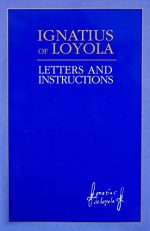
Ignatius of Loyola: Letters and Instructions

Open access Open Access Creative Commons License

LCCN: 2006935927
ISBN10: 1880810689
ISBN (hcv): 978-1-880810-67-5
ISBN (pbk): 978-1-880810-68-2
Copyright: 2006
Publisher: Institute of Jesuit Sources

Open Access Documents
 
Cite

Ignatius of Loyola. “Ignatius on Obedience (1550).” In Essential Documents: Selected Sources for Jesuit History, edited by Institute for Advanced Jesuit Studies. Institute of Jesuit Sources, July 15, 2026. https://doi.org/10.51238/536I13z

In the summer of 1550, Ignatius offered a brief set of directions to his fellow Jesuits. He implores them to be “blind and prompt” in their obedience, prepared to leave any occupation on the instant, all for “God’s greater praise and the greater spiritual progress of all of us.” The instructions were sent by Juan Alfonso de Polanco.


Reverend Father Master Ignatius wishes, for God’s greater praise and the greater spiritual progress of all of us—as he has already partly set forth in other constitutions—that from now on when he calls anyone, or the Father Minister calls any priest or lay member, or the sub-minister any lay member, the one called should come immediately as to the voice of Christ our Lord, obeying in the name of his Divine Majesty. Thus, the obedience should be blind and prompt to such an extent that if one is at prayer, he should leave his prayer; if one is writing and hears the voice of his superior—or, more accurately, the voice of Christ our Lord—and has begun a letter, that is to say, an A or a B, he should not finish it. Similarly, if he happens to be with anyone at all, even a prelate (unless he owes that person obedience), he should come if he is called by any of his superiors. In cases where a person is called while taking a bodily restorative of any kind, that is, is either at table or in bed; or while busy with a sick person, serving him a potion or medicine or engaged in some service which could not be interrupted without harm to the sick person, or is helping to bleed him; or if the person called is making his confession, or about to receive Communion, or hearing the confessions of others if he is a priest—in these cases he should send to the superior asking whether he wishes him to leave his meal, get out of bed, or leave whatever else it may be.

Given at Rome, August 24, 1550

Received at Messina, September 12, 1550

Ignatius of Loyola: Letters and Instructions

Open access Open Access Creative Commons License

LCCN: 2006935927
ISBN10: 1880810689
ISBN (hcv): 978-1-880810-67-5
ISBN (pbk): 978-1-880810-68-2
Copyright: 2006
Publisher: Institute of Jesuit Sources

Open Access Documents
 

Welcome Back!

Login to your account below

Create New Account!

Fill the forms below to register

Retrieve your password

Please enter your username or email address to reset your password.

Add New Playlist